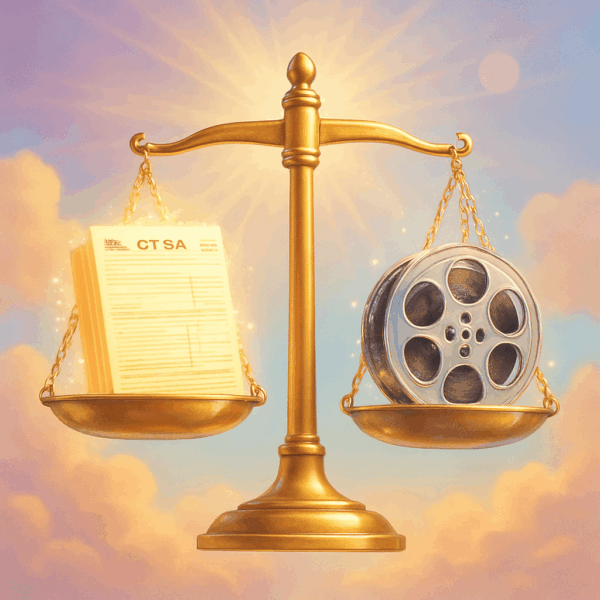

When Climate Collides With Code
How a Group of Gen‑Z Plaintiffs Rewired Montana’s Constitution—and What It Signals for the Future of Intellectual Property Fights
By TheOneLawFirm.com Contributors
“A clean and healthful environment necessarily includes a stable climate system.”
—Chief Justice Mike McGrath, Held v. State of Montana (2024)
The Show‑Down in Helena
On a warm June morning, sixteen kids—from kindergarteners to college freshmen—filed into a spare, high‑ceilinged courtroom in Helena, laptops plastered with climate‑justice stickers in tow. Eight trial days later, Judge Kathy Seeley handed down a 103‑page opinion that steamrolled decades of fossil‑fuel politics, striking a 2023 statute that forbade regulators from even mentioning greenhouse‑gas emissions during project reviews.
Eighteen months after that, the Montana Supreme Court cemented her ruling. In one stroke, “Generation Alpha” had established the first state‑level constitutional right to a stable climate system. It was a thunderclap for environmental law—but the tremor is already rumbling through intellectual‑property corridors from Silicon Valley to Shenzhen.
Quick‑Look Case Stats
| Metric | Data |
|---|---|
| Plaintiffs | 16 youths (ages 5–22) |
| Trial Record | 23,000 pages; 18 expert witnesses |
| Target Statute | 2023 “MEPA Limitation” (no GHG analysis) |
| Decision Length | 103 pages (trial); 70 pages (Sup. Ct.) |
| Vote | 6‑1 (Mont. Sup. Ct.) |
| Key Phrase | “Fundamental constitutional right to a stable climate system” |
Visual Case Brief
| Heading | Detail |
|---|---|
| Issue | Does Montana’s ban on GHG analysis violate Art. II § 3 of the state constitution (clean & healthful environment)? |
| Rule | Fundamental‑rights → strict scrutiny; statute must be narrowly tailored to compelling interest. |
| Application | State conceded climate science; youth proved specific health harms; “Limitation” swept far beyond any legitimate administrative efficiency goal. |
| Conclusion | Statute facially unconstitutional; permanent injunction plus declaratory relief. |
Why IP Lawyers Should Care
| Climate Holding | IP Analog | Practical Play |
|---|---|---|
| Strict scrutiny for environmental right | Possible for property or speech clauses to trigger strict scrutiny of compulsory licensing statutes | Draft legislation (e.g., right‑to‑repair) with surgical precision; court may nuke over‑broad carve‑outs |
| “Substantial factor” causation (State needn’t be sole source of warming) | Supports probabilistic damage models in patent FRAND disputes | Use incremental‑harm theory to bolster injunction requests despite global infringement pool |
| Facial invalidation of statute | Attack state rules limiting trade‑secret actions or SEP injunctions | Challenge broad regulatory ceilings as unconstitutional takings of IP |
The Forensic Sci‑Fi of Trial
The plaintiffs’ legal team architected an evidentiary record that looked uncannily like a mega‑patent trial:
-
Peer‑reviewed modeling rendered in VR animations
-
Multidisciplinary expert panels (atmospheric physics ↔️ micro‑electronics)
-
Daubert‑proofing drills so tight that the State waived multiple cross‑exams
If you litigate patents, you already know this playbook. The twist? The same narrative force that explains semiconductor patents to lay juries can humanize algorithmic harms in copyright or trade‑secret cases.
Sidebar: Three Lessons for IP Litigators
Audit your forum’s constitution. State clauses on property or innovation may leapfrog statutory safe harbors.
Tool up on visuals. Climate graphs = claim charts. Judges remember what they can see.
Think small to win big. Court accepted incremental redressability; you don’t have to cure global piracy—just prove a meaningful nip and tuck.
The Butterfly Effect: From Carbon to Code
| Sector | Immediate Ripple | Next‑Gen Speculation |
|---|---|---|
| Clean‑Tech Patents | Green‑energy inventors tout Held to justify injunctive relief—even post‑eBay | Constitutional arguments for compulsory licensing if tech throttles emissions |
| Trade Secrets vs. Transparency | Fracking‑chemical recipes face disclosure under environmental rights | Broader push to divulge AI training data with ecological footprints |
| Counterfeit Goods | Destruction orders may yield to “re‑use & recycle” remedies | Courts experiment with carbon‑offset conditions in injunctions |
Block Quote to Tape to Your Monitor
“Courts once rolled their eyes at ‘injury‑in‑fact’ from a few molecules of CO₂. Now they’re treating every incremental ton as constitutionally relevant. Substitute ‘unauthorized byte’ and you glimpse the future of digital IP.”
—Professor Lila Mendez, University of Colorado Law
Stat Table: Parallel Litigation Momentum
| Year | Climate Litigation | IP Cross‑Over Event |
|---|---|---|
| 2022 | Juliana v. U.S. revived | EU proposes Data Act forcing cloud‑interoperability |
| 2024 | Held affirmed | Apple settles “right‑to‑repair” claims in 26 states |
| 2025 | Hawai‘i Supreme Court hears youth climate suit | U.S. FTC drafts rule on compulsory SEP licensing for EV chargers |
The Road Ahead
Montana’s constitution was written on 1970s typewriters; its newest precedent is being parsed by machine‑learning models hunting for the next big defense. Whether you guard carbon‑capture patents or prosecute deep‑fake trademarks, ignore Held at your peril: in the hands of creative counsel, environmental fundamental rights could become the skeleton key that unlocks—or unravels—whole swaths of intellectual‑property doctrine.
So cue up those VR demonstratives, polish your Daubert motions, and maybe, just maybe, keep an eye on the weather report. Your next IP case could hinge on how hot the planet gets.
Endnotes
-
Held v. State of Montana, 2024 MT 312, 533 P.3d 1043 (Mont. 2024) Justia Law
-
Findings of Fact & Conclusions of Law, Held v. Montana, No. DV‑20‑449 (Mont. 1st Jud. Dist. Ct. Aug. 14 2023) ELAW
-
Climate Case Chart, Columbia U. Sabin Center, Case No. 11091 Climate Change Litigation
-
Climate in the Courts, “Montana Supreme Court Upholds Historic Youth Climate Lawsuit Win,” Jan. 2025 Climate in the Courts
-
Western Environmental Law Center, “Victory Order PDF,” Aug. 14 2023 Western Environmental Law Center
-
State Court Report, Case Tracker: Held v. Montana (DA 23‑0575) State Court Report
-
Reuters, “Montana top court says youth have right to stable climate,” Dec. 18 2024 Reuters
-
The Guardian, “Montana supreme court upholds right to ‘stable climate system’ for youngsters,” Dec. 18 2024 The Guardian
-
Stateline, “Montana Supreme Court affirms decision in historic youth climate case,” Dec. 19 2024 Stateline